

Body Contouring Surgery
What Is Body Contouring?
Body contouring surgery encompasses a range of procedures designed to reshape and refine the body’s silhouette by removing excess fat, skin, and tissue, and, in some cases, adding volume where it has been lost. These procedures address areas of the body that remain resistant to improvement through diet, exercise, or weight loss alone.
Body contouring spans a broad range of procedures that include
to more extensive skin resection surgeries (tummy tuck, arm lift, thigh lift, etc.). Many patients benefit from a combination of approaches. The appropriate procedure, or combination of procedures, depends on where the concern is located, whether the primary issue is fat, skin laxity, or both, and the patient’s overall goals and health.
At Golden State Plastic Surgery, Dr. Shih performs body contouring surgery with an individualized approach guided by each patient’s anatomy, goals, and overall health. Procedures can be performed as standalone operations or combined strategically to achieve comprehensive results in a single surgical setting.
Who Is a Candidate for Body Contouring?
Body contouring is best suited for patients who:
- Are within 10–15 pounds of their goal weight
- Have maintained a stable weight for at least 6–12 months
- Have specific areas of excess fat, skin, or tissue laxity that have not responded to diet and exercise
- Are in good general health and do not smoke (or are willing to stop)
- Have realistic expectations about what surgery can achieve
Patients who have undergone significant weight loss are often excellent candidates, particularly for procedures that address excess skin. In these cases, most surgeons recommend waiting until weight has been stable for at least 6–12 months before proceeding.
Body contouring is not a substitute for weight loss, and is most appropriate for patients who are at or near a stable, healthy weight and are seeking to address specific anatomic concerns. Patients with a BMI above 32 may be advised to achieve further weight reduction before surgery to optimize safety and outcomes.
Fat vs. Skin Laxity: Why It Matters
The most important first step in determining which procedure is right for you is understanding whether your primary concern is an issue of excess fat, excess skin, or a combination of both.
Excess Fat
Localized fat deposits in the abdomen, flanks, thighs, arms, back, or elsewhere that persist despite a healthy weight and consistent exercise are a common indication for liposuction. Liposuction removes fat mechanically and is highly effective for patients with good skin elasticity. In patients with adequate skin tone, liposuction alone can produce significant and lasting contour improvement.
Liposuction does not tighten skin. In patients with reduced skin elasticity due to age, prior pregnancy, or significant weight loss removing fat without addressing skin laxity may result in loose or irregular skin contour. Accurate assessment of skin quality is an essential part of pre-operative planning.
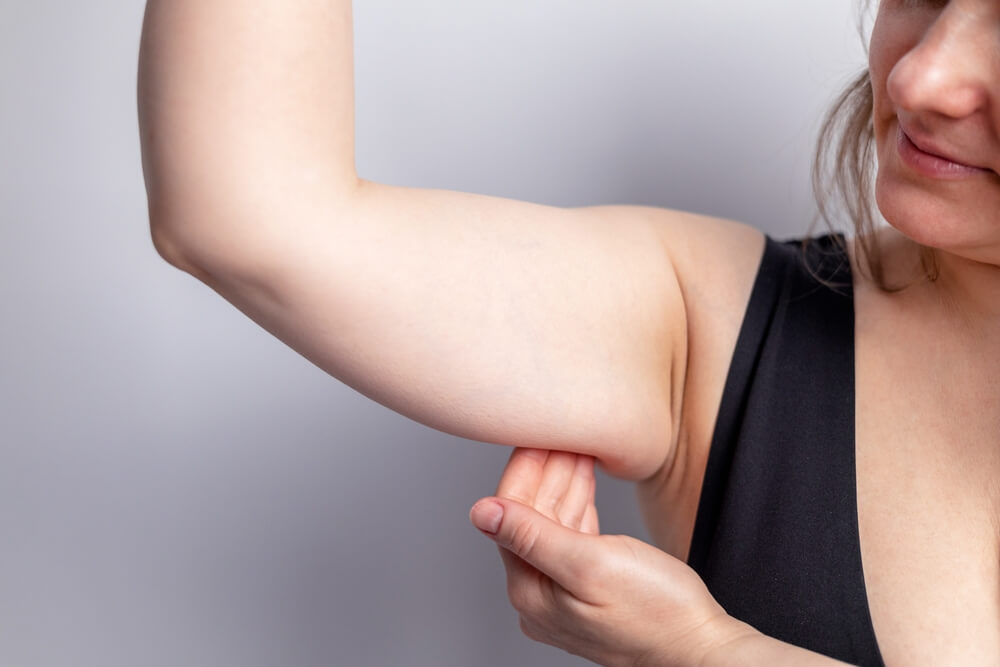
Excess or Loose Skin
Skin laxity, the loss of skin elasticity and firmness, cannot be corrected by liposuction or non-surgical treatments alone when it is significant. Excess skin that hangs or folds, particularly following major weight loss or pregnancy, requires surgical excision. Procedures such as abdominoplasty, brachioplasty (arm lift), thigh lift, and lower body lift are designed specifically to remove redundant skin, tighten the remaining tissue, and restore a smooth, firm contour.
These procedures leave scars, which are a necessary trade-off for meaningful improvement in skin contour. Scar placement is planned carefully to fall in locations that are as inconspicuous as possible beneath a bra line, bikini line, or natural skin fold, and scars typically fade significantly over time.
Combined Fat and Skin Concerns
Most patients presenting for body contouring have a combination of excess fat and skin laxity. In these cases, a combined approach of liposuction for fat removal and a skin-resection procedure for tissue tightening produces the most complete and balanced result. The appropriate combination depends on the location and severity of each concern and is determined during your consultation with Dr. Shih.
Body Contouring Procedures
Body contouring includes several procedures, each designed to address specific concerns. These procedures are often performed individually or combined for a more comprehensive result.
|
Procedure |
What it Addresses |
Removes Fat |
Tightens Skin |
Removes Skin |
|
Liposuction |
Localized fat deposits resistant to diet and exercise |
Yes |
Indirectly (mild) |
No |
|
Tummy Tuck (Abdominoplasty) |
Excess abdominal skin/fat, weakened abdominal muscles |
Yes (combined) |
Yes |
Yes |
|
Arm Lift (Brachioplasty) |
Excess skin/fat of upper arms |
Yes (combined) |
Yes |
Yes |
|
Thigh Lift |
Excess skin/fat of thighs |
Yes (combined) |
Yes |
Yes |
|
Fat Transfer |
Volume loss or contour irregularities |
Yes (from donor site) |
No |
No |
|
Gynecomastia Surgery |
Male chest excess tissue |
Yes (limited) |
Yes |
Sometimes |
Liposuction
Liposuction is the most commonly performed body contouring procedure. It uses a thin cannula to mechanically dislodge and suction out subcutaneous fat from targeted areas of the body. Liposuction is most effective in patients with good skin elasticity and well-defined areas of localized fat that are disproportionate to the rest of the body.
Common treatment areas include:
- Abdomen and flanks (“love handles”)
- Back and bra line (“bra rolls”)
- Hips and buttocks
- Inner and outer thighs (“saddlebags”)
- Upper arms
- Chin and neck
Liposuction is not a weight loss procedure. It is a contouring tool that removes discrete fat deposits to improve body proportion. Most patients are within a normal or near-normal weight range at the time of surgery.
Tummy Tuck (Abdominoplasty)

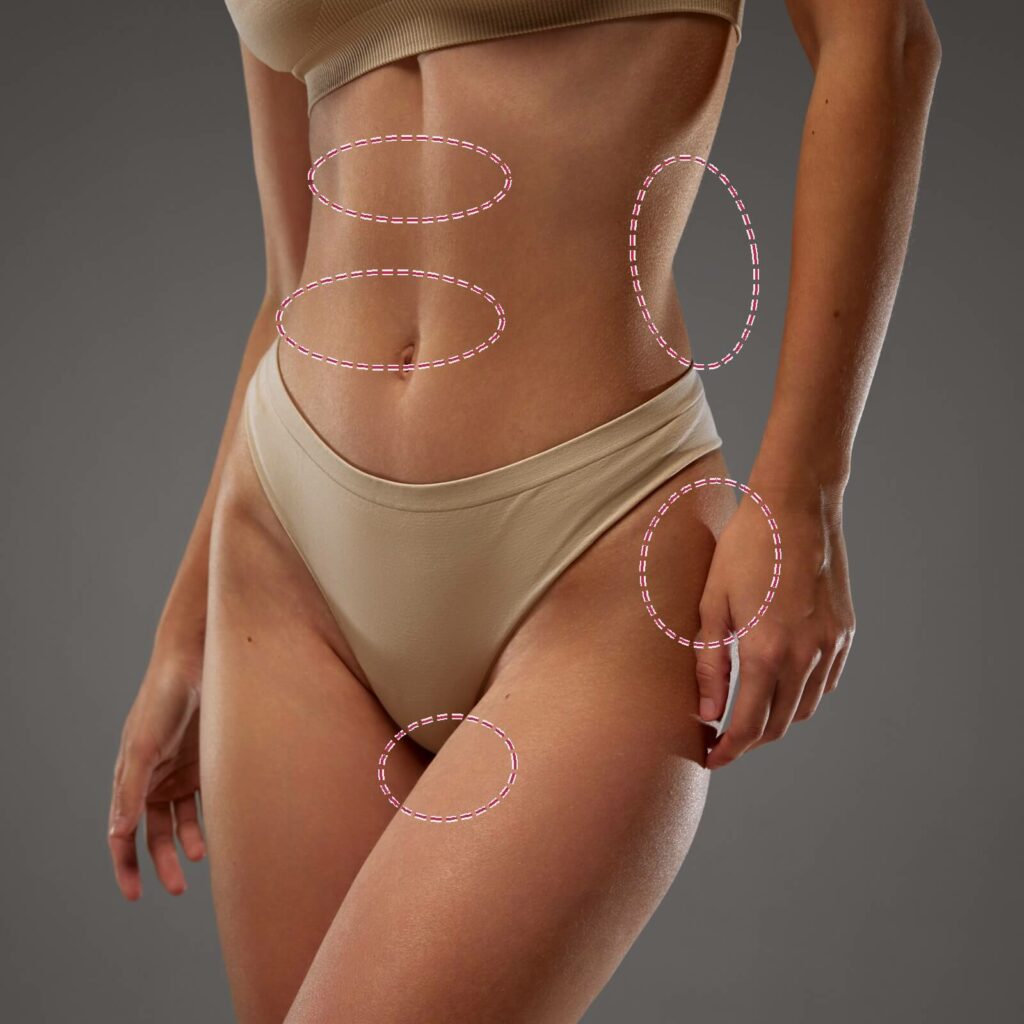
Abdominoplasty removes excess skin and fat from the lower and mid abdomen, tightens the underlying rectus abdominis muscles when diastasis (separation) is present, and repositions the umbilicus for a natural result. It is among the most transformative body contouring procedures, particularly for patients who have experienced pregnancy or significant weight loss and have excess lower abdominal skin that cannot be addressed with liposuction alone.
- Full (standard) abdominoplasty involves an incision along the lower abdomen, placed to fall within the bikini line, and produces a scar that, while permanent fades and is concealed by undergarments.
- Mini-abdominoplasty addresses limited lower abdominal skin excess with a shorter incision and without umbilical repositioning.
Extended abdominoplasty involves a longer incision that extends to the flanks and hips, typically indicated for patients after massive weight loss
Arm Lift (Brachioplasty)
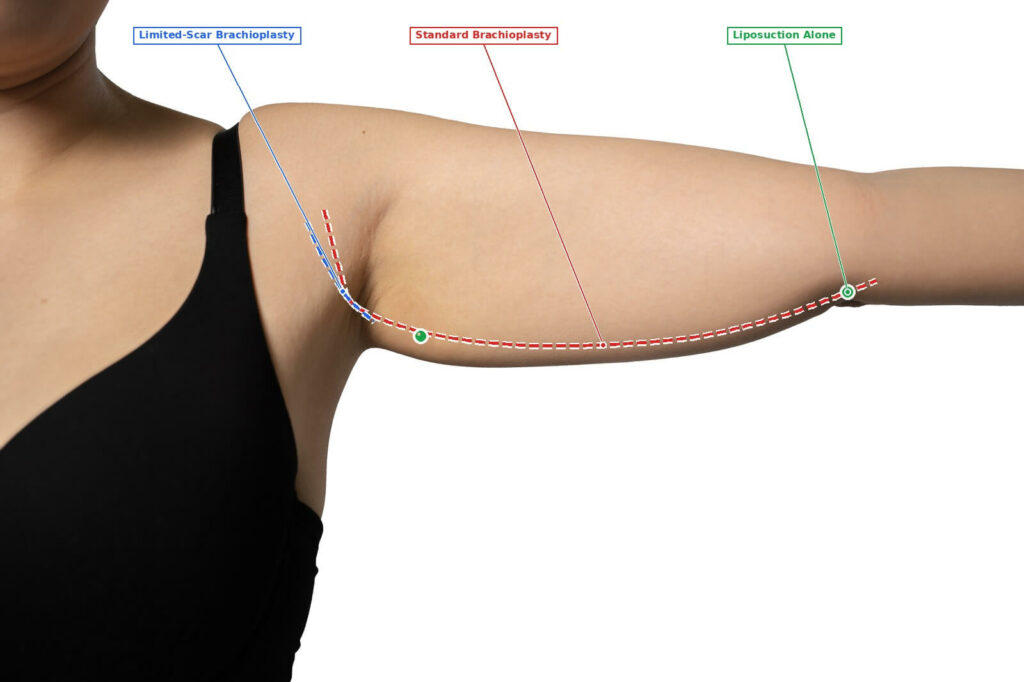
Brachioplasty removes excess skin and fat from the upper arms, the area commonly referred to as “bat wings,” which develop after significant weight loss or with aging. The procedure involves an incision along the inner aspect of the arm from the axilla to the elbow, excising the excess tissue and producing a firmer, more defined arm contour. The resulting scar runs along the inner arm and is visible when the arms are raised, though it typically fades considerably over time.
For patients with minimal upper arm laxity and a predominantly fatty concern, a short scar (mini) brachioplasty or liposuction alone may be a potential alternative option to standard brachioplasty. This is evaluated based on skin quality and the degree of excess during consultation.
Thigh Lift
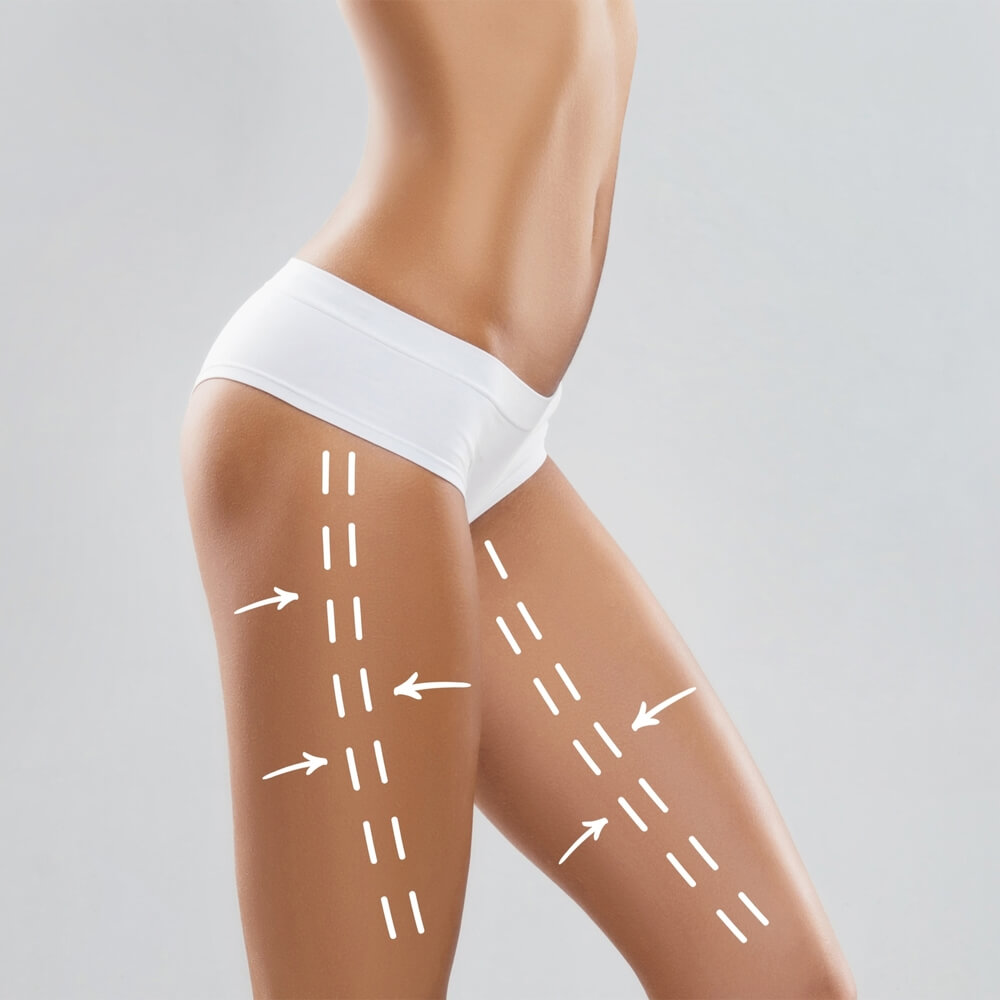
Thigh lift surgery removes excess skin and fat from the inner thighs (medial thigh lift) or outer thighs, improving contour, reducing skin friction, and tightening the tissue of the upper leg. Inner thigh skin laxity is a particularly common concern following significant weight loss, as the inner thigh skin is thin and loses elasticity readily. A medial thigh lift incision is placed in the groin crease and along the inner thigh.
Fat Transfer
Fat transfer, or autologous fat grafting, harvests fat from an area of relative excess using liposuction, processes it to concentrate viable fat cells, and injects it into an area of volume deficit or contour irregularity. In body contouring, fat transfer is most commonly used to restore volume to the hips or buttocks, or to correct localized depressions and irregularities following prior liposuction or other procedures.
Because fat transfer relies on living cells establishing a blood supply in their new location, not all transferred fat survives. Retention rates vary, and some patients require more than one session to achieve the desired result. Fat transfer provides a natural look and feel and avoids the use of implants, but is limited by the volume of donor fat available and the degree of augmentation achievable per session.

Gynecomastia Surgery (Male Chest Reduction)
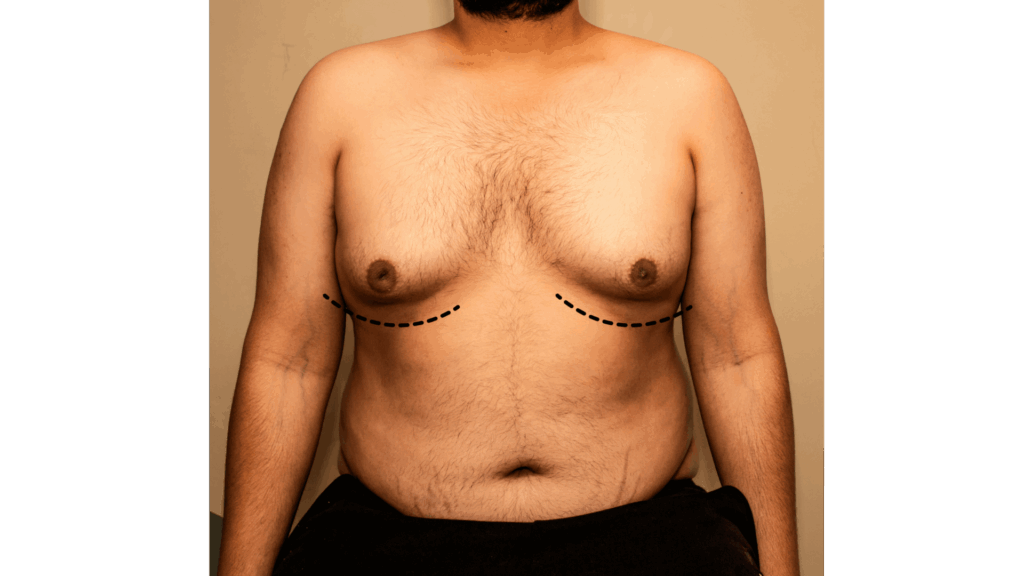
Gynecomastia is the enlargement of male breast tissue, which may involve excess glandular tissue, fat, or both. It is a common condition, affecting up to 60–70% of men at some point in their lives.
While some cases improve with time or weight loss, true gynecomastia, caused by firm glandular tissue beneath the nipple, does not resolve without surgery. The condition can affect one or both sides of the chest and may be associated with tenderness, asymmetry, or a more rounded chest contour. Most patients require a combination of liposuction and direct glandular excision for definitive treatment, with skin removal and free nipple grafting in more severe cases.
Combining Body Contouring Procedures
Many patients achieve their best results through a strategically planned combination of procedures performed in a single operative setting. Combining procedures reduces overall recovery time compared to staging them separately and can produce more harmonious, proportionate results across multiple areas of concern.
Common combinations include:
- Tummy tuck + liposuction: The most frequently combined pairing. Liposuction of the flanks, back, or hips refines the overall waistline while abdominoplasty addresses the loose abdominal skin and weakened muscle.
- Mommy makeover: A personalized combination of procedures designed to restore the body after pregnancy and breastfeeding. Most commonly abdominoplasty, breast lift or augmentation, and liposuction.
- Massive weight loss body contouring: Patients who have undergone significant weight loss often require multiple skin resection procedures. These can be staged over time or, where appropriate and safe, combined in a single procedure. Common combinations include abdominoplasty with breast lift or brachioplasty with breast lift.
- Liposuction + fat transfer: Fat removed by liposuction from one area can be processed and re-injected to add volume where it is desired, most commonly the buttocks or hips, in the same procedure.
The safety of combining procedures depends on total operative time, blood loss, and the patient’s overall health. Dr. Shih follows evidence-based guidelines for safe combination surgery and will advise on which combinations are appropriate for your anatomy, health status, and goals during consultation.
What to Expect During Your Consultation
During your body contouring consultation, Dr. Shih will perform a thorough physical examination to assess the distribution of excess fat, skin quality and laxity, underlying muscle tone, and overall body proportion. He will review your weight history, any prior surgeries, and your current health status. Based on this assessment, he will recommend a personalized surgical plan including the specific procedures, sequencing, and whether a combined or staged approach is most appropriate.
For patients who have undergone bariatric surgery or significant weight loss, documentation of weight stability is an important part of the consultation process. Dr. Shih will discuss realistic expectations for outcomes, recovery, and scarring, and will ensure that you have a clear understanding of the scope of the procedure or procedures being recommended.
With a focus on proportion, natural contour, and long-term results, Dr. Shih combines meticulous surgical technique with a patient-centered approach to deliver outcomes that are balanced, refined, and durable.
Risks and Considerations
Body contouring surgery is safe and effective when performed in appropriately selected patients, but all surgical procedures carry inherent risks. General risks common to body contouring procedures include:
- Bleeding or hematoma
- Infection
- Poor wound healing or scarring
- Seroma (fluid collection beneath the skin)
- Changes in skin sensation (temporary or permanent)
- Contour irregularities or asymmetry
- Deep vein thrombosis (DVT) or pulmonary embolism
- Risk is higher with longer procedures and is managed with compression devices and early ambulation
- Skin necrosis (rare; risk elevated in smokers)
- Anesthesia-related risks
The risk profile of combined procedures is not simply additive; longer operative times and more extensive dissection carry incrementally higher risk, and Dr. Shih follows strict safety guidelines in determining which combinations are appropriate for individual patients. These risks will be discussed in detail during your consultation and pre-operative visits.
Frequently Asked Questions
What is body contouring surgery?
Body contouring surgery refers to a group of procedures that reshape the body by removing excess fat, excess skin, or both, and, in some cases, adding volume through fat transfer. Common procedures include liposuction, tummy tuck (abdominoplasty), arm lift, thigh lift, and fat transfer.
Is body contouring the same as weight loss surgery?
No. Body contouring procedures are tools for sculpting and reshaping patients who are at or near their goal weight but have localized concerns, such as stubborn fat deposits, loose skin, or changes in body shape following pregnancy or weight loss, that cannot be resolved through diet and exercise alone. Bariatric surgery (gastric bypass, sleeve gastrectomy) is a separate specialty focused on reducing body weight in patients with obesity.
Am I a good candidate for body contouring?
Good candidates are generally within 5-10 lbs of their goal weight, have maintained that weight for at least 6 months, and have specific areas of fat or skin laxity that have not responded to lifestyle measures. Patients with a BMI above 32 may be asked to pursue further weight reduction before surgery to optimize safety and outcomes.
Can liposuction tighten loose skin?
Liposuction has a modest indirect skin-tightening effect in patients with good skin elasticity, as the skin contracts over the treated area after fat removal. It does not, however, remove or significantly tighten skin that has already lost elasticity, as is common after major weight loss, pregnancy, or with age. Patients with significant skin laxity require a skin-resection procedure (tummy tuck, arm lift, thigh lift, or lower body lift) to address loose skin directly.
Can multiple body contouring procedures be done at the same time?
Yes. Many patients undergo a combination of procedures in a single surgical setting. This can improve overall results and reduce total recovery time. The safety of combining procedures depends on surgical complexity and overall health.
What is a mommy makeover?
A mommy makeover is not a single fixed procedure; it is a personalized combination of body contouring and breast procedures designed to address the specific changes that pregnancy and breastfeeding have made to an individual patient’s body. The most common combination includes abdominoplasty (to address abdominal skin and muscle laxity), breast lift or augmentation (to restore breast shape and volume), and liposuction (to refine contour). The procedures included are individualized to each patient during consultation.
How long is recovery after body contouring surgery?
Recovery depends on the procedure:
-
Light activity: 1–2 weeks
-
Full activity: 4–8 weeks
-
Swelling improves: 4–6 weeks
-
Final results: 3–6 months
More extensive procedures or combined surgeries may require a longer recovery.
How long do I need to wait after weight loss before body contouring?
If you have lost a significant amount of weight through bariatric surgery, medication (e.g., GLP-1 agonist), or lifestyle changes, it is recommended that you wait until your weight has been stable for at least 6 months before proceeding with body contouring.
For post-bariatric patients, nutrition, including protein levels, iron, and vitamins, is also an important factor in surgical readiness and healing capacity. Dr. Shih will coordinate with your bariatric team when appropriate to ensure you are optimized for surgery.
Will I have scars after body contouring?
Yes. Procedures that remove excess skin, such as tummy tuck, arm lift, or thigh lift, result in permanent scars. These are placed strategically and typically fade significantly over time. Liposuction scars are small and usually minimal.
How long does swelling last after body contouring?
Swelling after body contouring surgery is normal and expected. The majority of swelling resolves within 4 to 6 weeks, but residual swelling, particularly after more extensive procedures, can persist for 3 to 6 months. Final results are typically not fully apparent until swelling has completely resolved. Wearing a compression garment as directed, staying hydrated, and avoiding prolonged standing or activity in the early recovery period help minimize and resolve swelling more quickly.
How much does body contouring cost?
Cost varies considerably depending on the procedure or procedures performed, surgical complexity, anesthesia, and facility fees. Individual procedures such as liposuction carry different fee structures than more extensive operations such as abdominoplasty or lower body lift. A detailed cost estimate specific to your planned procedure is provided following your consultation with Dr. Shih.
Does Golden State Plastic Surgery offer financing for body contouring?
Yes. Financing options including CareCredit are available for patients pursuing body contouring procedures. Our team can provide details during your consultation or pre-operative planning process.
About Dr. Shih | Body Contouring Surgeon
Dr. Shih is a board-certified plastic surgeon at Golden State Plastic Surgery with expertise across the full spectrum of body contouring procedures, from liposuction and abdominoplasty to post-bariatric body contouring and combination procedures. He combines detailed anatomical assessment with a disciplined surgical approach to deliver results that are proportionate, natural-appearing, and long-lasting, with a strong emphasis on patient safety and individualized planning.