

Gynecomastia Surgery (Male Chest Reduction)
What Is Gynecomastia?
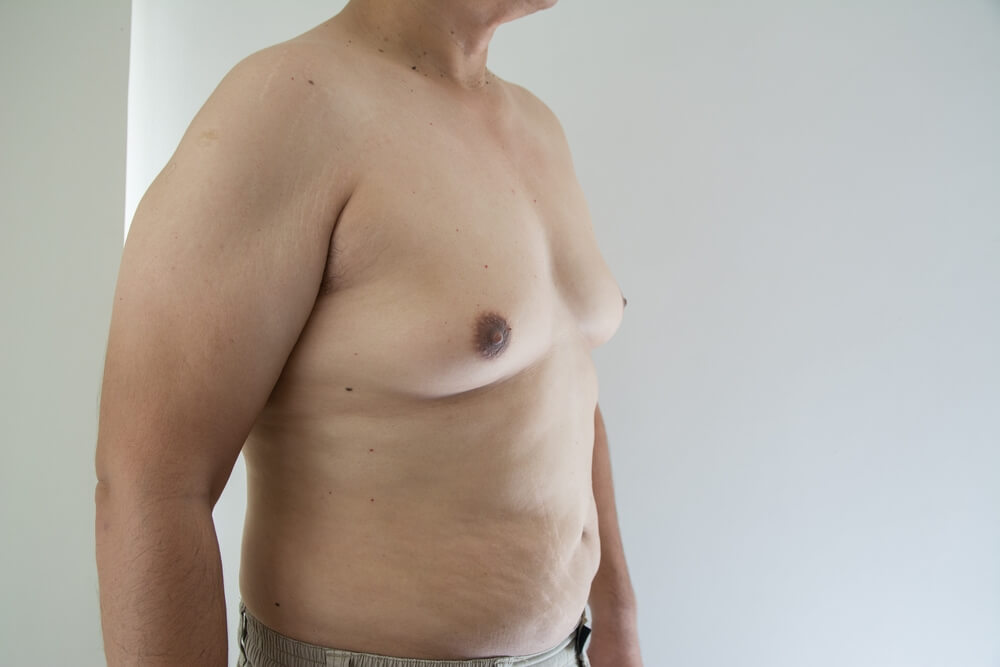
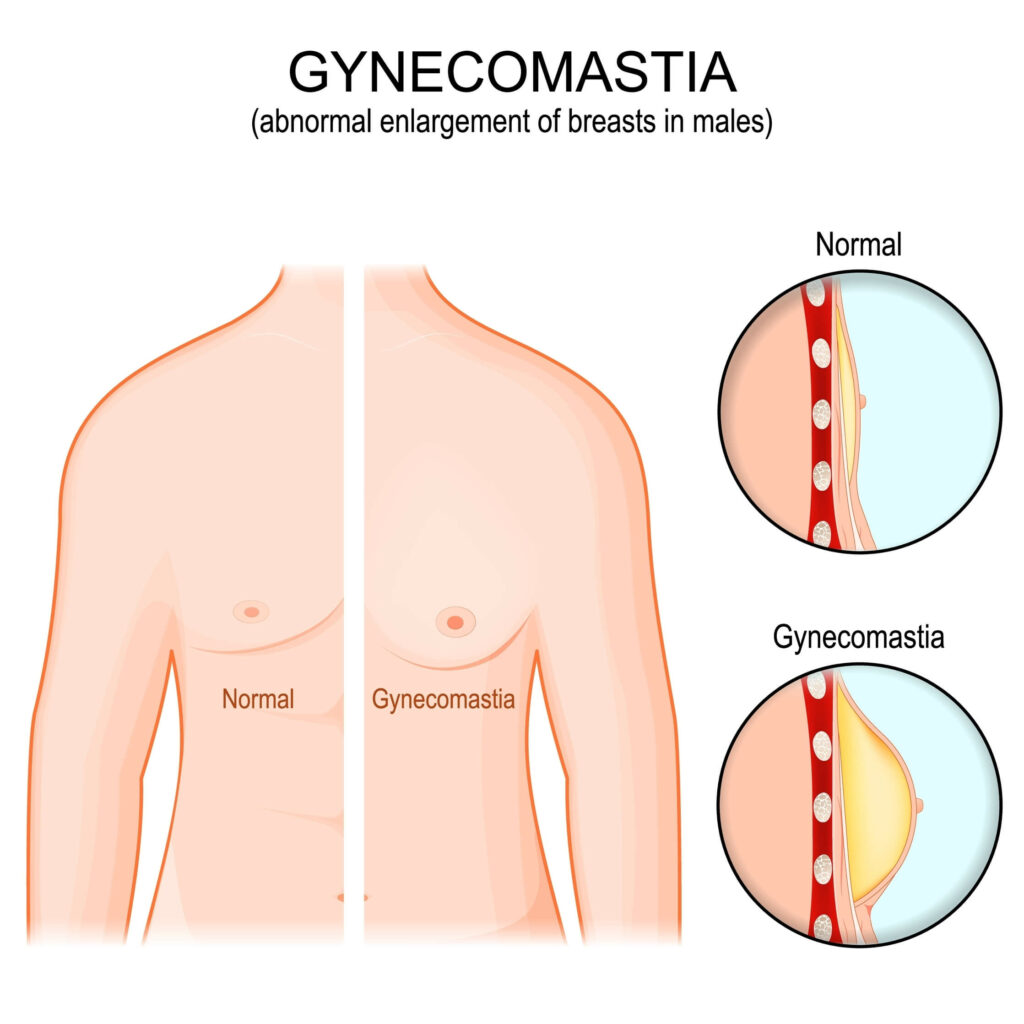
Gynecomastia is the enlargement of male breast tissue, which may involve excess glandular tissue, fat, or both. It is a common condition, affecting up to 60–70% of men at some point in their lives.
While some cases improve with time or weight loss, true gynecomastia, caused by glandular tissue, does not resolve without surgery. The result may be a fuller, more rounded chest contour that does not respond to diet or exercise.
Gynecomastia surgery removes excess tissue to create a flatter, firmer, more masculine chest contour, with a focus on natural proportion and minimal visible scarring.
What Causes Gynecomastia?
Gynecomastia most commonly results from an imbalance between estrogen and testosterone activity in breast tissue. In many patients, more than one factor is involved.
Physiologic Changes
Gynecomastia is common during certain life stages. It frequently occurs during puberty and resolves spontaneously in the majority of cases within 1 to 2 years, although in may persist into adulthood in some cases.
Medications and Substances
Certain medications and substances can contribute to gynecomastia, including anabolic steroids, testosterone therapy, anti-androgens, some psychiatric and cardiovascular medications, and cannabis or alcohol use.
Medical Conditions
Underlying conditions such as hypogonadism, thyroid disorders, liver disease, kidney disease, or hormone-producing tumors can contribute to gynecomastia.
Idiopathic
In many patients, no clear cause is identified. This is known as idiopathic gynecomastia and is a common presentation.
True Gynecomastia vs. Pseudogynecomastia
Understanding this distinction is critical for treatment:
- True gynecomastia: firm glandular tissue beneath the nipple (requires excision)
- Pseudogynecomastia: excess fat (may respond to weight loss or liposuction)
- Mixed (most common): combination of both
Because most patients have mixed tissue, treatment is typically combination-based.
How Is Gynecomastia Treated?
Treatment is based on the underlying tissue:
- Excess fat: treated with liposuction
- Glandular tissue: requires surgical excision
- Mixed cases (most common): combination of liposuction and excision
In more advanced cases with loose skin, skin tightening or removal may be required.
Patients considering gynecomastia surgery often also explore body contouring procedures such as liposuction to address other areas of concern.
Gynecomastia Surgery
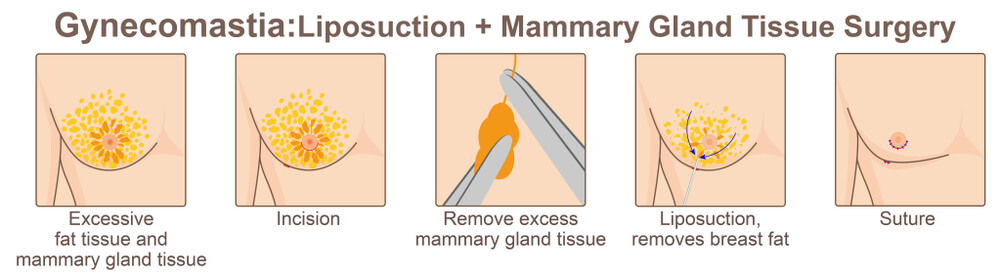
Gynecomastia surgery (male chest reduction) is designed to remove excess tissue and restore a flatter, more defined chest. Depending on the technique, surgery can take 2-3 hours and is generally performed under general anesthesia.
Liposuction
Liposuction is used to remove excess fatty tissue and refine chest contour. It is performed through small, well-concealed incisions and is often combined with glandular excision for optimal results. Learn more about liposuction and body contouring options.
Direct Glandular Excision
Firm glandular tissue beneath the nipple is removed through a small periareolar incision. This is a critical component of surgery, as glandular tissue is generally too dense to be addressed by liposuction alone.
Combination Approach
Most patients with gynecomastia benefit from both liposuction and direct excision for a smooth, natural contour.
Skin Resection
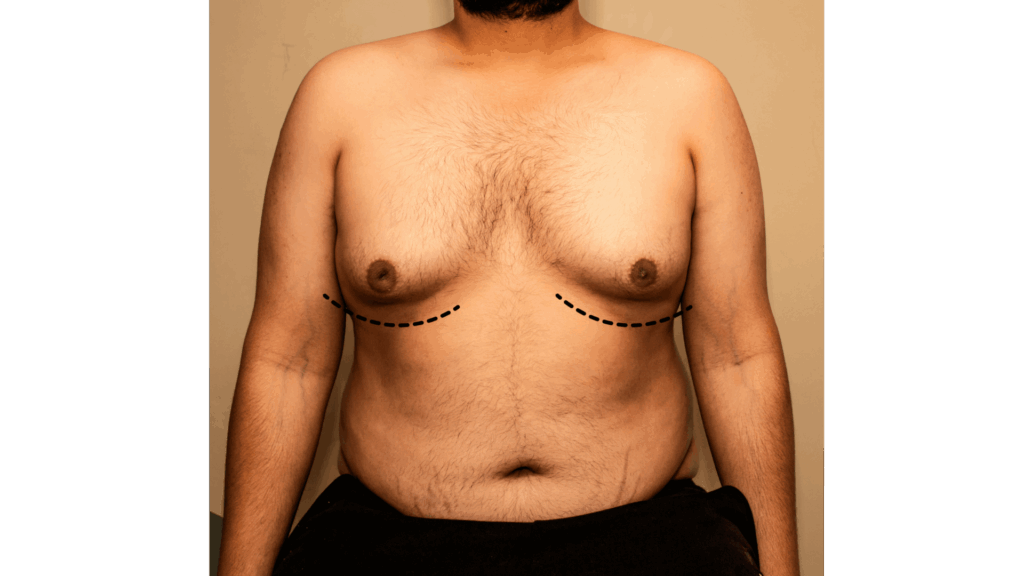
This is reserved for higher-grade gynecomastia or after massive weight loss, and involves larger incisions to remove skin. Free nipple grafting is often necessary in these cases.
Grades of Gynecomastia
Gynecomastia is often classified based on severity and skin excess:
|
Grade |
Clinical Features |
Typical Treatment |
|
Grade I |
Mild enlargement, no excess skin |
Liposuction ± excision |
|
Grade II |
Moderate enlargement, no excess skin |
Liposuction + excision |
|
Grade III |
Moderate enlargement with mild skin excess |
Combination + possible skin tightening |
|
Grade IV |
Significant enlargement with excess skin |
Combination + skin resection |
Most patients present with Grade I–II, which can be treated with liposuction and direct excision through small, well-concealed incisions.
Who Is a Candidate?
You may be a candidate for surgery if you:
- Have persistent chest fullness despite weight loss
- Have stable gynecomastia present for ≥12 months
- Are at a stable weight
- Have had labs to rule out reversible causes of gynecomastia
- Do not smoke (or are willing to stop)
- Are in good overall health
- Have realistic expectations
What to Expect During Your Consultation
Your consultation includes a detailed evaluation of chest contour, tissue composition, skin quality, and symmetry. Dr. Shih will review your medical history, medications, and any prior evaluation to ensure that underlying causes have been appropriately addressed.
Because gynecomastia varies widely in presentation, a precise and individualized approach is essential. Surgical planning focuses on achieving a natural chest contour with minimal, well-concealed scarring.
Recovery After Gynecomastia Surgery
Recovery is generally well tolerated. Most patients return to work within about one week and resume full activity, including upper body exercise, by approximately six weeks.
|
Timeframe |
What to Expect |
|
First few days |
Swelling, soreness, compression garment |
|
~1 week |
Return to light activity or work |
|
2–6 weeks |
Gradual improvement in contour and swelling |
|
~6 weeks |
Return to full activity |
|
3–6 months |
Final contour and refinement |
A compression garment is worn continuously for the first 4 weeks to minimize swelling and support healing, then tapered to as needed for an additional 2-4 weeks.
Results and Expectations
Gynecomastia surgery provides long-lasting improvement in chest contour.
- Noticeable improvement is visible early
- Final results develop over 3–6 months
- Recurrence is uncommon when glandular tissue is removed and contributing factors are addressed
The goal is a natural, balanced, masculine chest contour, not overcorrection.
Risks and Considerations
As with any surgical procedure, gynecomastia surgery carries potential risks, including bleeding, infection, contour irregularities, changes in nipple sensation, asymmetry, and fluid collection. These will be discussed in detail during your consultation.
Frequently Asked Questions
Is gynecomastia the same as excess chest fat?
No. True gynecomastia involves firm glandular tissue beneath the nipple that does not respond to weight loss or exercise. Excess chest fat without glandular tissue is called pseudogynecomastia and may improve with weight loss. Many patients have a combination of both.
Can gynecomastia go away on its own?
In adolescents, gynecomastia often resolves within 1 to 2 years without treatment. In adults, longstanding gynecomastia, especially when glandular tissue is present, rarely resolves on its own.
Will losing weight get rid of gynecomastia?
Weight loss can reduce the fatty component of chest fullness but does not eliminate glandular tissue. Persistent fullness beneath the nipple after weight loss usually indicates true gynecomastia, which requires surgery for correction.
What does gynecomastia surgery involve?
Most patients undergo a combination of liposuction and glandular excision through small, well-concealed incisions to create a flatter chest contour.
Will I have visible scars after surgery?
Scarring is typically minimal. Incisions are placed along the areola and in small liposuction entry points that heal discreetly. More extensive scarring may be necessary in cases requiring skin removal.
How long do I need to wear a compression garment?
Compression is typically worn continuously for the first 4 weeks, then gradually reduced over the following weeks. It helps minimize swelling and supports the healing contour.
Can gynecomastia come back after surgery?
Recurrence is uncommon when glandular tissue is properly removed. However, it can occur if contributing factors, such as anabolic steroid use, certain medications, or significant weight gain, are not addressed.
Is gynecomastia surgery painful?
Discomfort is usually moderate and well controlled with medication. Most patients experience tightness and soreness rather than severe pain, with significant improvement by the end of the first week.
When can I return to exercise?
Light activity can begin immediately. Most patients resume lower body exercise within 2 to 3 weeks and return to full upper body exercise by about 6 weeks, depending on healing.
Will surgery affect nipple sensation?
Temporary changes in sensation are common and typically improve over time. Permanent changes are less common but possible.
Does the severity (grade) of gynecomastia affect surgery?
Yes. Mild cases are usually treated with liposuction and gland removal through small incisions. More advanced cases with excess skin may require additional procedures and result in more visible scarring.
Does insurance cover gynecomastia surgery?
Gynecomastia surgery is usually considered cosmetic and not covered by insurance. In select cases involving medical causes or significant symptoms, coverage may be possible depending on your plan.
About Dr. Shih | Gynecomastia Surgeon
Dr. Shih is a board-eligible plastic surgeon at Golden State Plastic Surgery with extensive experience in gynecomastia correction. He combines a thorough understanding of chest anatomy with individualized surgical technique, including liposuction, periareolar glandular excision, and skin resection when indicated, to deliver a flat, firm, naturally masculine chest contour with minimal visible scarring. Each surgical plan is designed around the patient’s specific grade of gynecomastia, tissue composition, and goals.
Golden State Plastic Surgery offers gynecomastia surgery consultations for men seeking correction of enlarged breast tissue, chest contouring after weight loss, or evaluation of persistent pubertal or adult-onset gynecomastia in the Bay Area.